
5 Years Later…
A look back on St Basil Writers’ Workshop

Several of you have heard the origin story of St. Basil’s: how on a cold winter evening, our Dean, Dn. Nicholas, received a phone call from Fr. Adam, Dean of St Athanasius College. Fr. Adam said, “If I could make all your writing dreams come true, what would that look like?”
While the timing wasn’t the best (Dn. Nicholas’s wife was, at that very moment, giving birth to their fourth child!), the question was a genie-in-the-bottle kind of miracle.
So a week later, Dn. Nicholas called back with his wish: “I want to create the definitive workshop for intermediate writers who are on the cusp of publishing or are at the beginning of their publishing career. I want to give them the last push of craft mentorship they need to embark on or reignite their author career with confidence. And I want to do that by assembling all the best teachers I myself have learned from.”
Fr. Adam said, “Ask your teachers, your wish is my command!” or something to that effect.
So at that very hour, Dn. Nicholas called Jonathan Pageau, Paul Kingsnorth, Katherine Bolger Hyde, and Nicole Roccas. Without even deliberating, every single instructor said yes.
Five years later, we just closed our applications for 2026-2027 with a record number of applicants. But St. Basil’s hasn’t just grown quantitatively. It’s also grown qualitatively. Today, we want to share highlights of our five-year journey with you.
2021
Dn. Nicholas gets the call from Fr. Adam. He invites his dream team: Jonathan Pageau, Paul Kingsnorth, Nicole Roccas, and Katherine Bolger Hyde. Everyone says yes!
2022
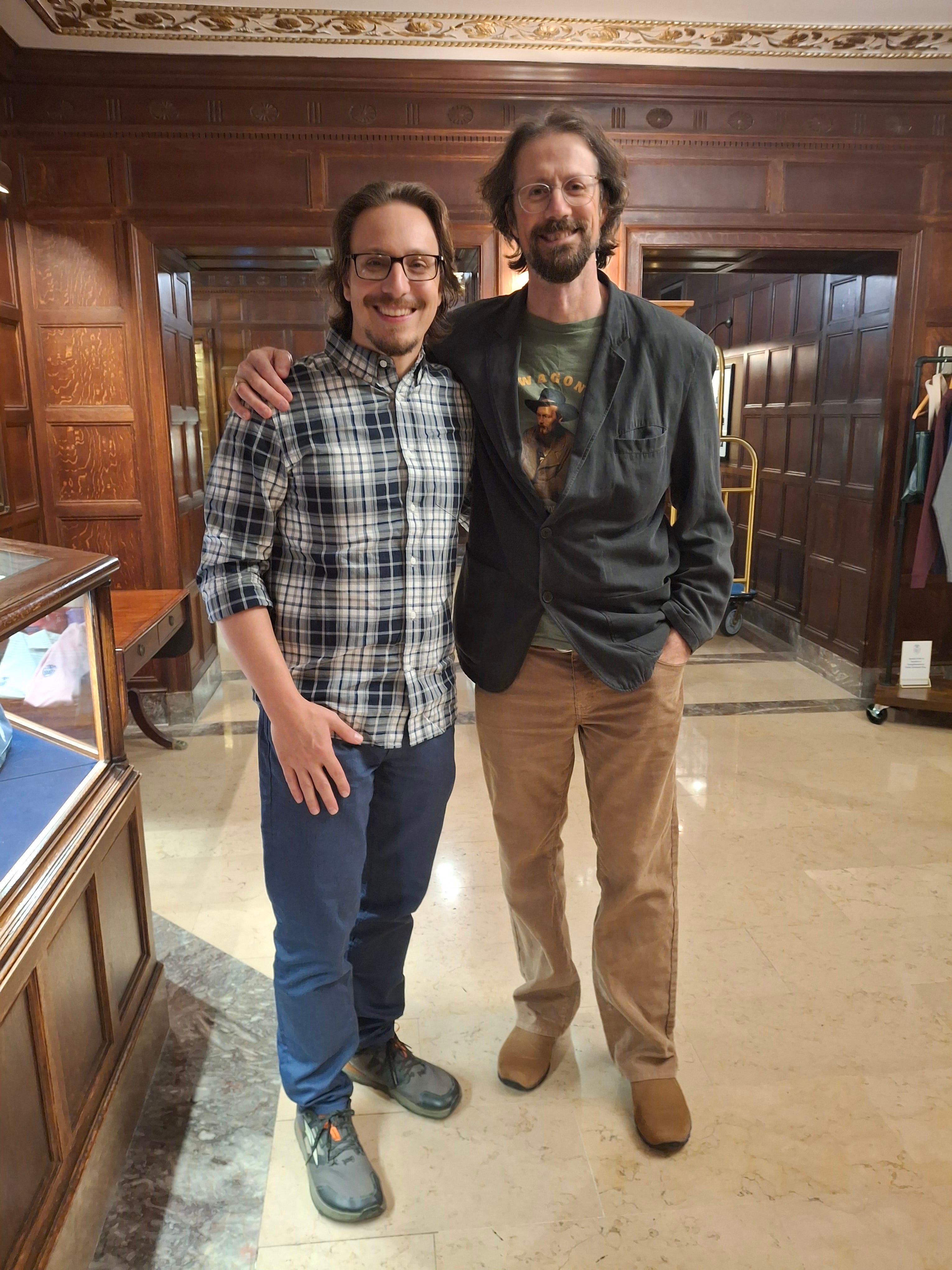
Our first cohort of 12 authors shows up in upstate New York for a writing retreat that kicks off our year-long workshop. We’re still getting our sea legs under us, but we’re doing something right: this cohort goes on to meet on their own every week for a writing group and every year for their own in-person retreat. A huge tribute is due to Suzie, Dn. Nicholas’s business coach at the time, who organized and cooked for and generally championed the Workshop.
2023
Maybe because we’re teachers and not administrators, we forget something kind of important… telling people St. Basil’s exists! We only get 15 applicants and decide, rather than moving forward with applicants who aren’t at the level of craft expertise we’re looking for, to take a year off and organize ourselves. We hire Anna Vander Wall, a graduate of cohort one, as our operations director.
2024
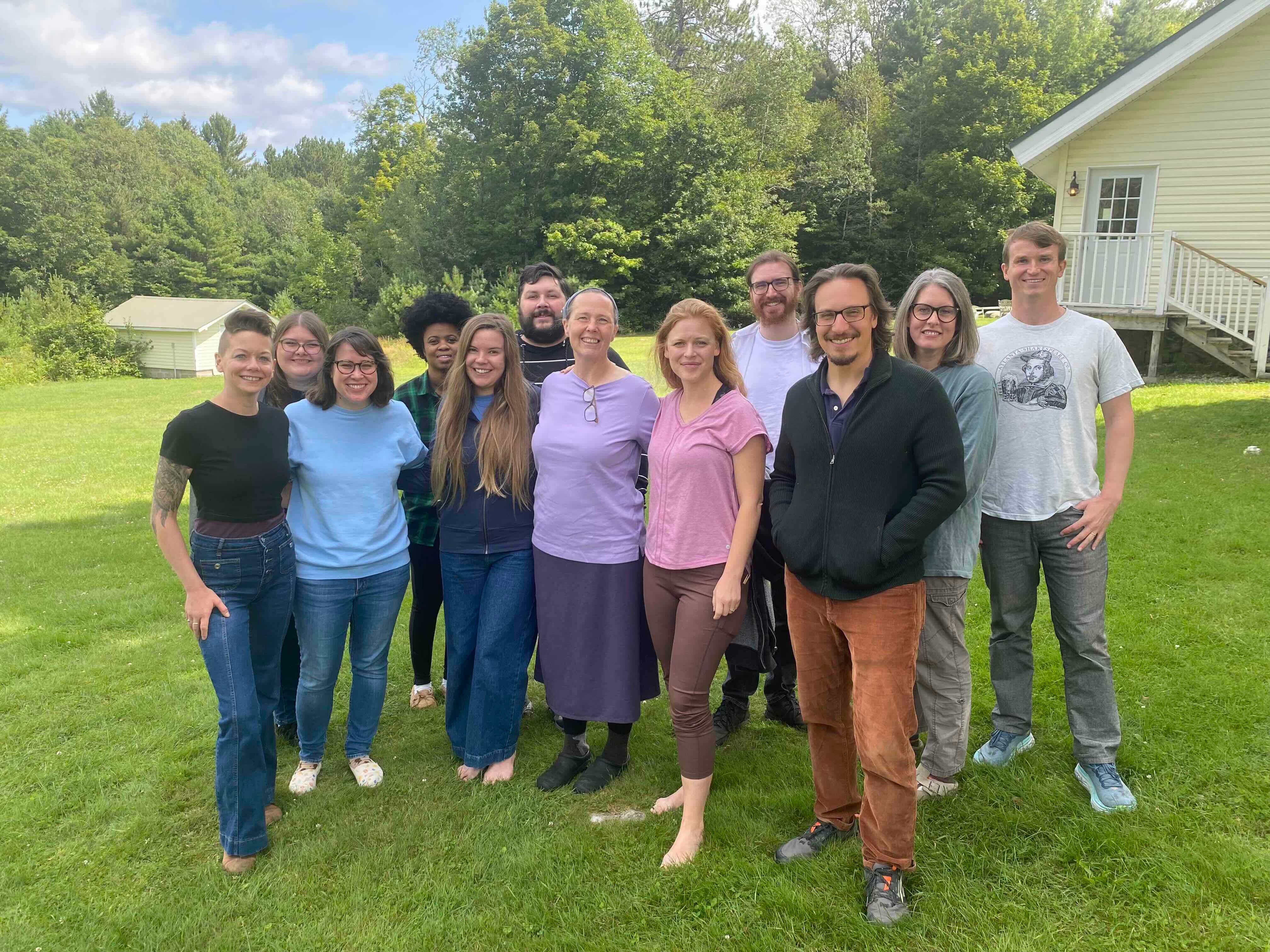
Based on feedback from cohort one, we revamp our course curricula to improve cohesion between courses and add three new focus areas: a deep-dive on genre-specific techniques, an introduction to trade and self-publishing, and a peer critique class taught by Dr. Samira Kawash, another cohort one grad. It works! We get 52 applicants, all incredibly strong writers, and the program takes off at a new level!
2025
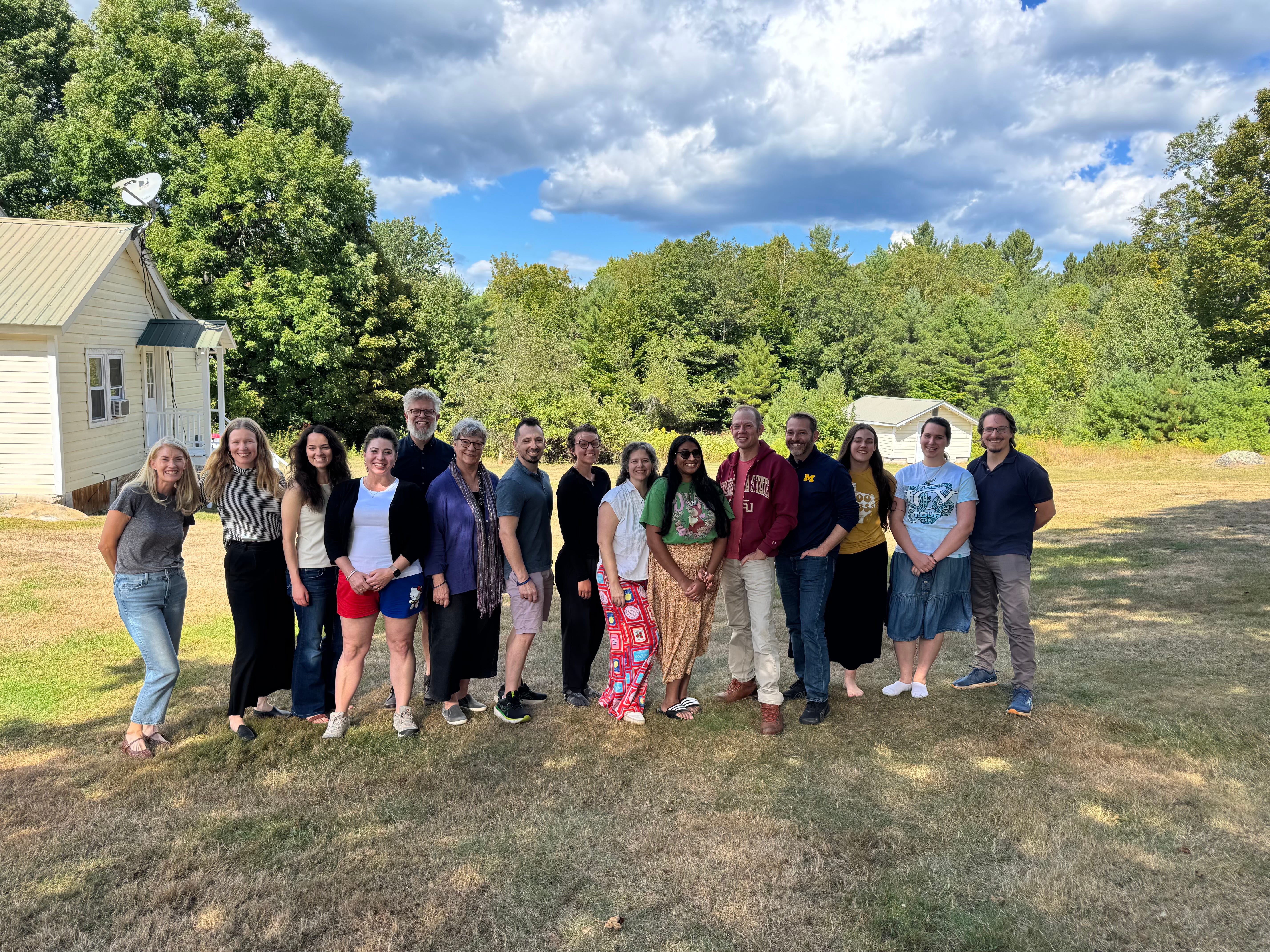
This program starts running itself! We have another year of 53 very talented applicants. Our St Basil grads begin to pitch their books, receive acceptance letters, and publish debut novels.
2026
We just closed our application cycle with a record number of applicants (60!), pushing our acceptance rate to 25%.
What’s next? Through the prayers of St Basil, another incredibly strong year with writers who become lifelong creative support buddies, as well as some really wonderful new novels by our grads!
Why St Basil’s? Here’s what our instructors say
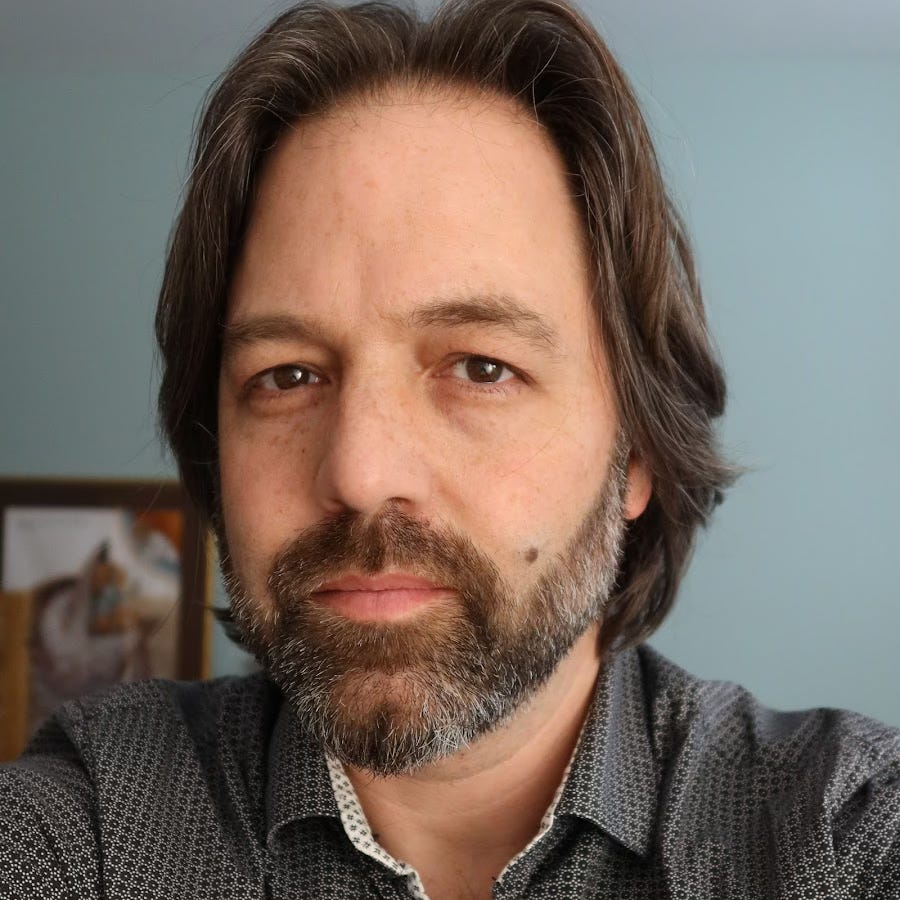
“I sincerely believe this: I think that Christians hold the future of storytelling in their hands. But I think there’s a lot of work to be done for that to happen. For several generations, most Christian storytelling has been boring and ideological.
Now there are so many things happening all at once that make it possible for us to create powerful and transformative stories from the Christian point of view. It’s like a zeitgeist. It’s hard to explain. No one person is responsible. It’s just something that seems to be happening. I’m watching people like Paul Kingsnorth and Martin Shaw convert, and I think we’re going to see a lot more of that. It’s time.” ~ Jonathan Pageau
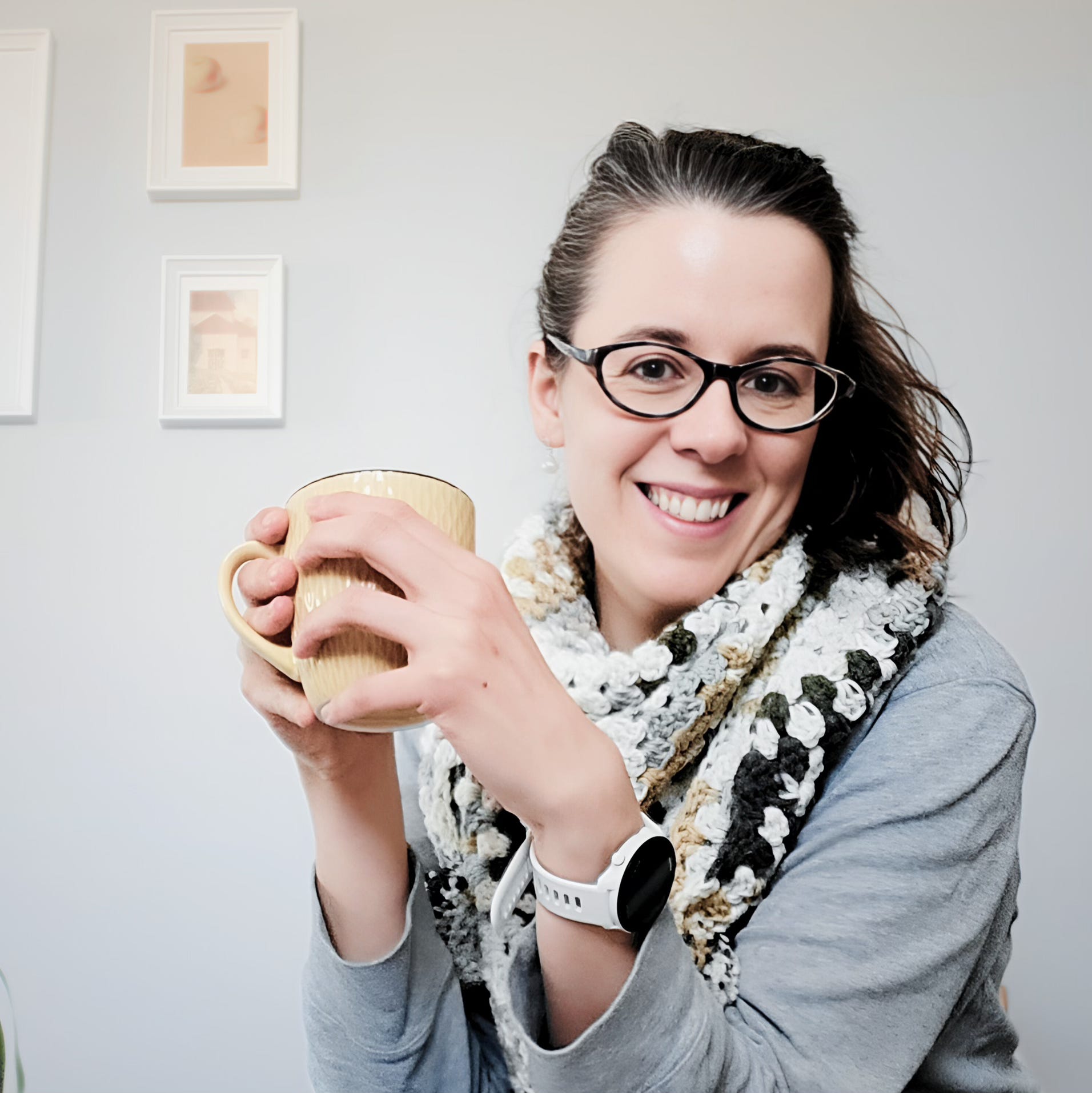
“There needs to be a third space for writers that is not the church and is also not a conventional writers’ circle. We need this third place, almost like a playground, where you get the kind of creative space to play with what God has given you, and there are no stakes, and there is room to grow and tools to grow, and then figure out what it means to show up in the wider world with the talent God has given you.” ~ Nicole M. Roccas
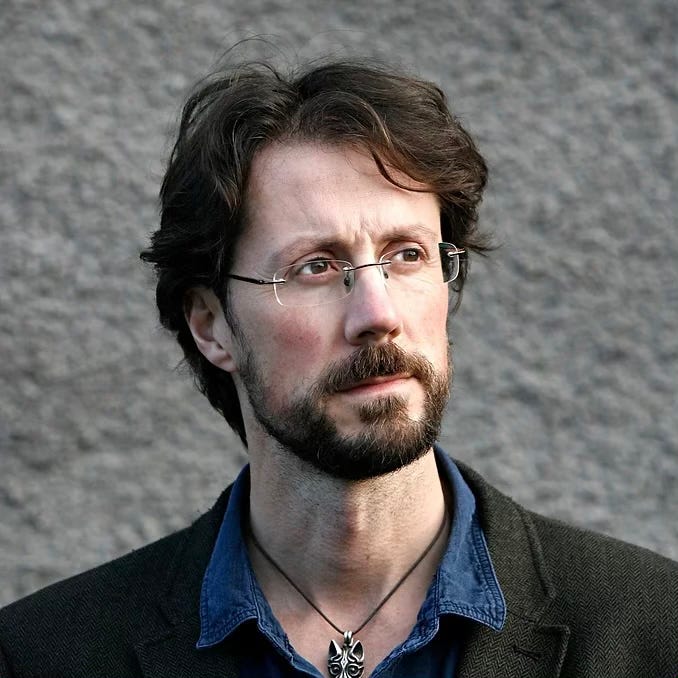
“I really like the idea of St. Basil’s. I think it’s really important. The idea of an Orthodox writing academy is a really good one, because it’s very difficult to write as a Christian without just being a ‘Christian writer’ who writes Christian propaganda that even bores Christians. No Christian wants to watch Christian films, because they’re awful, but they shouldn’t be!
It’s like political people writing boring books because they want to focus on the message and not offend anyone.
It doesn’t work like that. You have to let some wildness in. You have to be confident enough in your faith to be able to let some wildness in. So I wondered how much wildness you could let into a Christian Orthodox writing academy, but also how Christian you could be when you’re teaching nature.” ~ Paul Kingsnorth
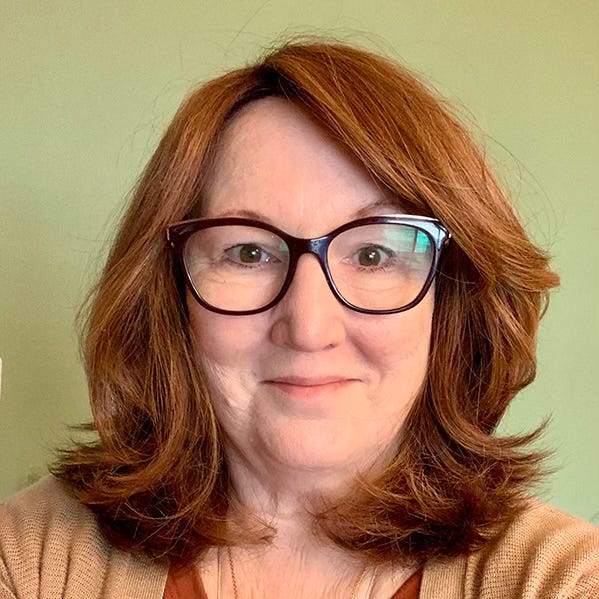
“Part of what’s great about St. Basil’s is that we can work with students on a more individual level so that we can guide them in the direction they want to go rather than a predetermined direction that we think is good. My impression of many MFA programs is that everybody comes out pretty much sounding the same–there’s a certain style they’re aiming toward; and the whole workshop vibe encourages that sameness because it’s like the old man, the boy, and the donkey–you’re listening to all these people telling you to do different things with your work, and it can end up homogenized and boring with all the life sucked out of it.
“The other thing, of course, is the Orthodox orientation. Writers going into any generic secular program are going to be on the defensive all the time if their writing has any Orthodox content or worldview at all. They’re constantly going to be having to say, ‘Well this is how I see the world, and it’s a valid way of seeing the world.’ And then the focus is off of improving their writing and on defending what they’re writing about. It’s extremely valuable to have a place where Orthodox writers and Christian writers in general can be nurtured within their own worldview.” ~ Katherine Bolger Hyde
A wonderful reflection on a wonderful programme. The inconvenient existence of the Atlantic Ocean (and the recent birth of my youngest daughter) kept me from appearing in the 2024 photograph, but I very much enjoyed and benefitted from my time in that cohort.